
If you run a venue, you might know Fever as a way to sell tickets. If you produce shows, you might know it as a marketing partner. If you have seen Candlelight in your city, you know it as the company putting an event on the calendar.
Those are three different relationships with the same company. They explain more about Fever's September 17 announcement than the size of the raise alone. Fever said it raised $250 million in new equity, led by EQT, after more than tripling revenue over three years while remaining EBITDA-positive. It says the capital will help it enter more markets, expand across event categories, and build tools for promoters, venues, artists, and other partners.
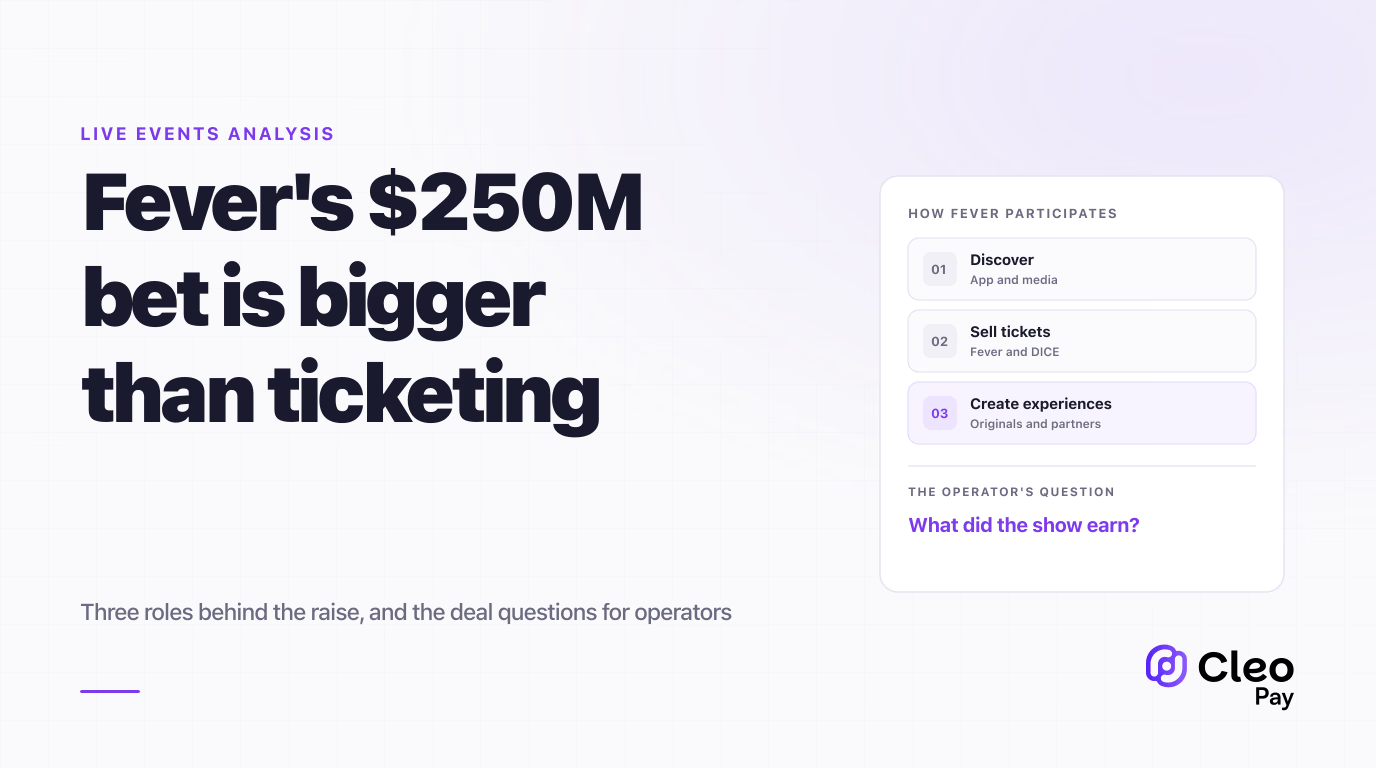
The interesting question for an independent operator is not whether to become Fever. It is which part of your business a company like Fever can help grow, and which parts you still need to own.
Three businesses under one name
Fever's public materials describe three connected activities. They are worth separating, because each creates a different deal for an operator.
Fever itself describes Fever Originals as ideas created by its in-house event team. Candlelight is an example. The company also offers licensing partnerships for operators that want to bring proven Fever formats to a new market. That is a different proposition from simply processing a ticket sale.
The businesses reinforce each other. A marketplace can show Fever what audiences are searching for. An event format gives the marketplace distinctive inventory. Ticket sales give the next production more data about demand and pricing. This feedback loop is an inference from the model Fever describes; Fever has not published a revenue split showing how much each activity contributes.
DICE widened the music side
In June 2025, Fever acquired DICE, the ticketing platform used by independent music venues, promoters, and festivals. Fever said DICE partners could continue using the product while gaining access to Fever's discovery channels. DICE's fan-facing model, including upfront pricing and its waitlist, stayed part of the pitch.
A one-year update named renewed or new relationships with Alexandra Palace, Framework and Sound Nightclub, and Public Records, among others. Alexandra Palace's commercial director specifically pointed to Fever's consumer channels as a possible way to reach new buyers.
That is the practical promise: a ticketing partner that might also help fill the room. A promoter can evaluate that claim show by show. Did the platform bring people who would not otherwise have bought? What did it cost to acquire them? Can the promoter reach them directly next time? Those answers matter more than the total size of the platform's audience.
The drone show is a useful test of what Fever actually does
It would be easy to describe DroneArt as a show Fever invented, built, and operates alone. That would be wrong. Fever's media kit calls DroneArt a Nova Sky Stories production presented by Fever. A Harry Potter edition was created with Warner Bros. Discovery Global Experiences. Fever also lists DroneArt among the experiences it markets as a Fever Original.
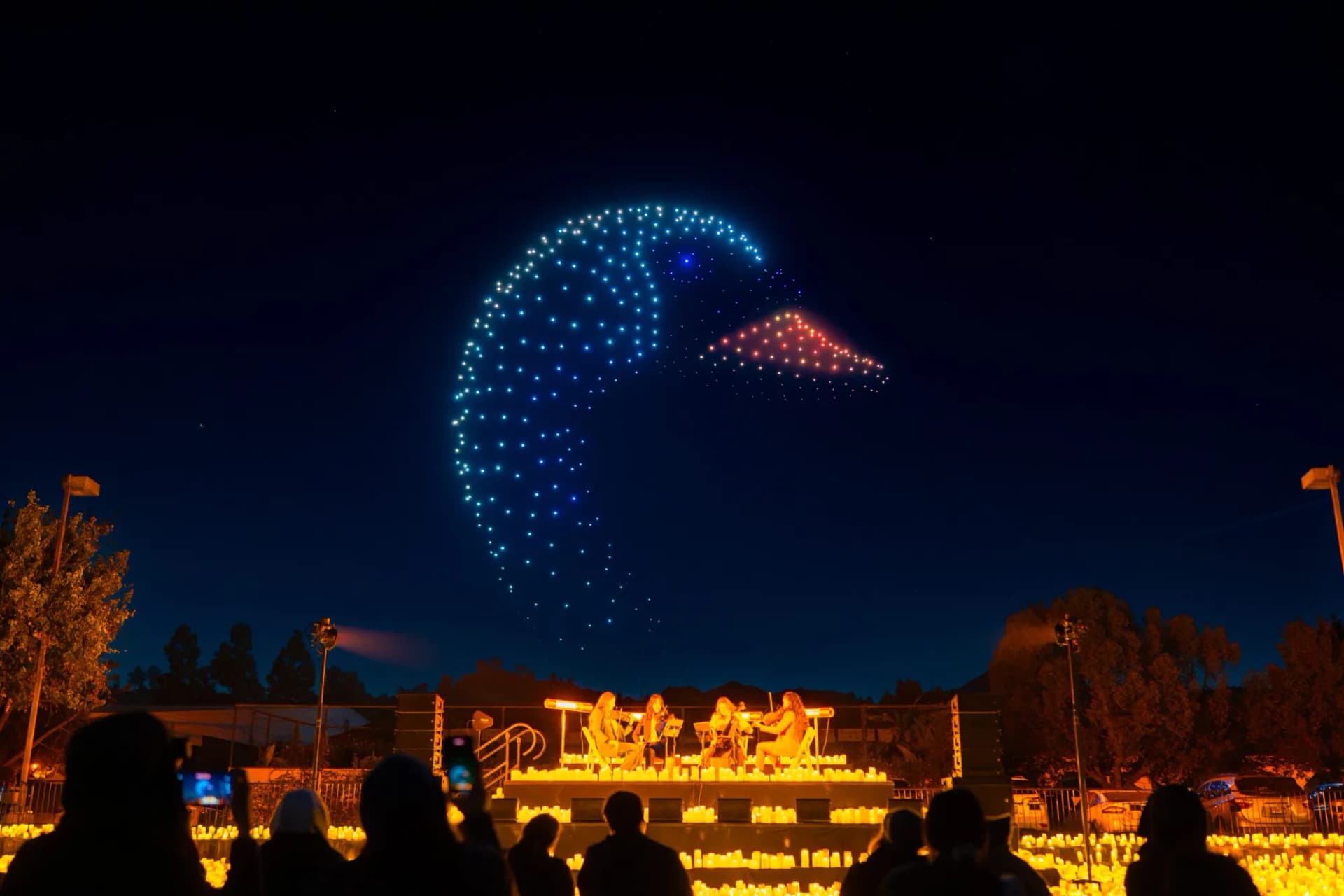
The distinction matters. In this model, one company can supply the show technology and creative production, another can supply rights to a recognizable property, and Fever can package, market, distribute, and present the experience. The audience sees one event. The business behind it is a set of contracts and capabilities.
For a venue or regional producer, that makes the real question more specific than "Should we do a drone show?" Ask who contributes the concept, who pays the deposits, who controls ticket prices, who staffs the site, and who is responsible if a date underperforms. The rights and risk allocation will decide whether a popular format is a good deal for your business.
Those terms need to survive the actual show. If one partner pays the drone producer and another pays site staff, record the commitments against the same date before tickets go on sale, then match the final invoices to that plan. Otherwise, the ticket report can look strong while the cost of delivering the experience remains scattered across inboxes and bank transfers.
What the raise does and does not prove
The $250 million is a vote of investor confidence in Fever's ability to scale this model. Fever says it operates in more than 55 countries and will use the new capital to expand geographically and improve partner tools for demand, targeting, ticketing, and repeatable formats. It is reasonable to read that as a plan to make discovery, ticketing, and event development work more closely together.
It does not establish that every venue or promoter will have a stronger 2027. Fever reports revenue growth and positive EBITDA for its own company, across countries and event categories. It has not disclosed the economics of a typical independent venue, the share of revenue from Originals versus third-party tickets, or the returns on a particular partner's shows. Those are different questions.
Nor does one company have to own every layer of an event. Fever's own examples show partnerships. For an independent operator, the question is where a partner adds value that you cannot efficiently build yourself, and where handing over control would be expensive later.
Four questions to put in the next ticketing or content deal
The useful response to Fever's growth is a sharper deal review. These questions apply whether the counterparty is Fever, another platform, or a show producer bringing a format to your venue.
- Where will the new demand come from? Separate sales to your existing audience from buyers the partner truly brings. Ask for reporting by channel and date, not just a total ticket count.
- Who can speak to the buyer after the show? Check what customer information you receive, what consent covers, and whether you can invite attendees to the next event under your own brand.
- Who owns the downside? Put deposits, production costs, refunds, cancellation terms, and settlement timing on one page. A bigger gross can still be a worse deal if most of the risk stays with you.
- Can you see the margin by event? Include talent, crew, venue, marketing, ticketing fees, and late-arriving supplier costs before calling a format repeatable. Make sure someone owns the invoice and payment record for each cost. If the final P&L arrives after the next date is already on sale, you are scaling on an estimate.
The last question is where Cleo Pay fits. Discovery and pricing can fill a room; the operator still has to know what the room earned. Cleo helps the cost side move: vendors and rotating crew can submit W-9 and bank details through an onboarding link, invoices can be captured and approved, ACH payments can be tracked, and bills and payments can sync to QuickBooks. Those are the records you need to close the show, alongside the ticket settlement and any costs handled outside Cleo. Our guide to closing an event P&L faster explains how to bring them together before the next date is already on sale.
Fever's bet says there is room to build much bigger businesses around live experiences. For independent operators, the best response is to know exactly which part of that growth a partnership delivers, and to keep a clear view of what each event earns.